
Hemangiosarcoma (HSA) is a cancer of the cells that line blood vessels. In dogs, it most often starts in the spleen, but it can also affect the heart, liver or skin. Because these tumors are made of blood vessels, they can bleed, sometimes suddenly.
Many families first learn about hemangiosarcoma in an emergency, after their dog collapses and needs surgery to remove the spleen. If that's where you are now, this post explains what the diagnosis means and what your options are next.
Signs and diagnosis
When a splenic tumor bleeds, dogs may suddenly become weak or collapse, have pale gums, breathe fast or develop a swollen belly. Some dogs have smaller bleeds that come and go, with a day or two of tiredness before they bounce back.
Not every splenic mass is cancer. About 60% of splenic masses turn out to be benign, but when a mass has ruptured and bled, about 60% are malignant. The only way to know for sure is to remove the spleen and send it to a pathologist. A liver biopsy during the same surgery is also important, since ultrasound can miss small spots of spread.
What the diagnosis means
Hemangiosarcoma of the spleen is an aggressive cancer. In about 80% of dogs, it has already spread at a microscopic level by the time it's found, even when scans look clear. With surgery alone, most dogs live about 1 to 3 months.
Adding treatment after surgery can extend that time. Typical survival with surgery and chemotherapy depends on the stage:
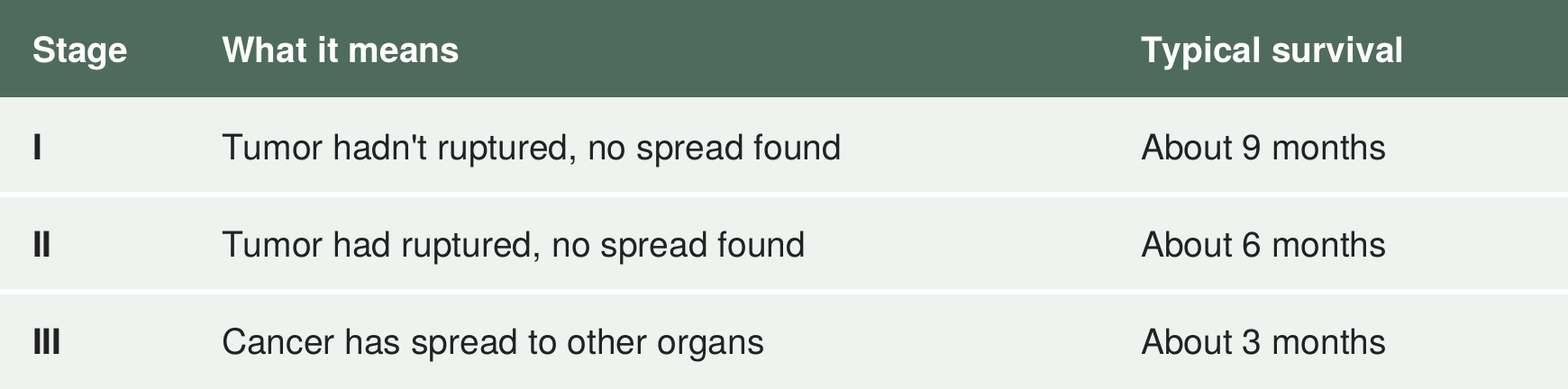
Hemangiosarcoma survival by stage: Stage I about 9 months, Stage II about 6 months, Stage III about 3 months.
These numbers are averages, and every dog is different. Some live much longer, and the goal throughout is good quality time at home.
Hemangiosarcoma of the skin is a different story. It's often treated with surgery alone and has a much better outlook.
Treatment options
Doxorubicin chemotherapy. This IV chemotherapy, given every 2 to 3 weeks for 5 treatments, is the standard of care and what I recommend first. It's given at a hospital, not at home, but I can help coordinate it and support your dog with integrative care throughout.
Oral chemotherapy at home. Metronomic chemotherapy (low daily doses of oral chemo) or a targeted therapy can be used on its own or after doxorubicin. Side effects are usually mild, and rechecks and bloodwork can happen at home.
Palliative care. For families focused on comfort, we can help control bleeding and pain and make the most of your time together at home.
Integrative care can start as soon as your dog is home from surgery, alongside any of these plans.
Supporting the whole body
As a board-certified oncologist and certified veterinary acupuncturist, I combine conventional cancer care with integrative medicine to help dogs feel their best and better tolerate treatment:
Chinese herbal medicine. Yunnan Baiyao helps control and prevent bleeding and eases pain. Other herbal formulas are used to support the immune system and help slow tumor growth. Each plan is tailored to your dog and checked for interactions with their other medications.
Turkey tail mushroom. Early studies suggested it might help dogs with hemangiosarcoma live longer. A later study didn't find a difference in survival, but it was very safe, so some families choose to include it.
Acupuncture to support the immune system, appetite and digestion, and to ease pain, discomfort and chemotherapy side effects.
Nutrition plans built around whole foods and omega-3 fatty acids. We avoid raw and grain-free diets during treatment.
Monitoring at home
After treatment, your dog will have a quick blood test to check red blood cell levels about once a month for the first several months, and chest x-rays and an abdominal ultrasound every 2 to 3 months.
Call your veterinarian or an emergency hospital right away if your dog has:
Pale or white gums
Sudden weakness or collapse
A swollen or tight belly
Fast or labored breathing
You don't have to figure this out alone
A hemangiosarcoma diagnosis is overwhelming, and the decisions come quickly. I offer in-home oncology consultations throughout San Diego and surrounding areas, so we can review your dog's results, talk about your goals and build a plan together in the comfort of your home. I work closely with your family veterinarian and keep them updated after every visit.
Call or text 858-833-5003, email contact@kindredpathvet.com, or visit kindredpathvet.com to schedule a consultation.
Crystal Garnett, DVM, DACVIM (Oncology), CVA
